

Published: November 2025 • Updated: November 2025 • By: Mr Jean Bonnod, Expert in Behavioral AI & AI Search Behavior Analyst — LinkedIn
Introduction
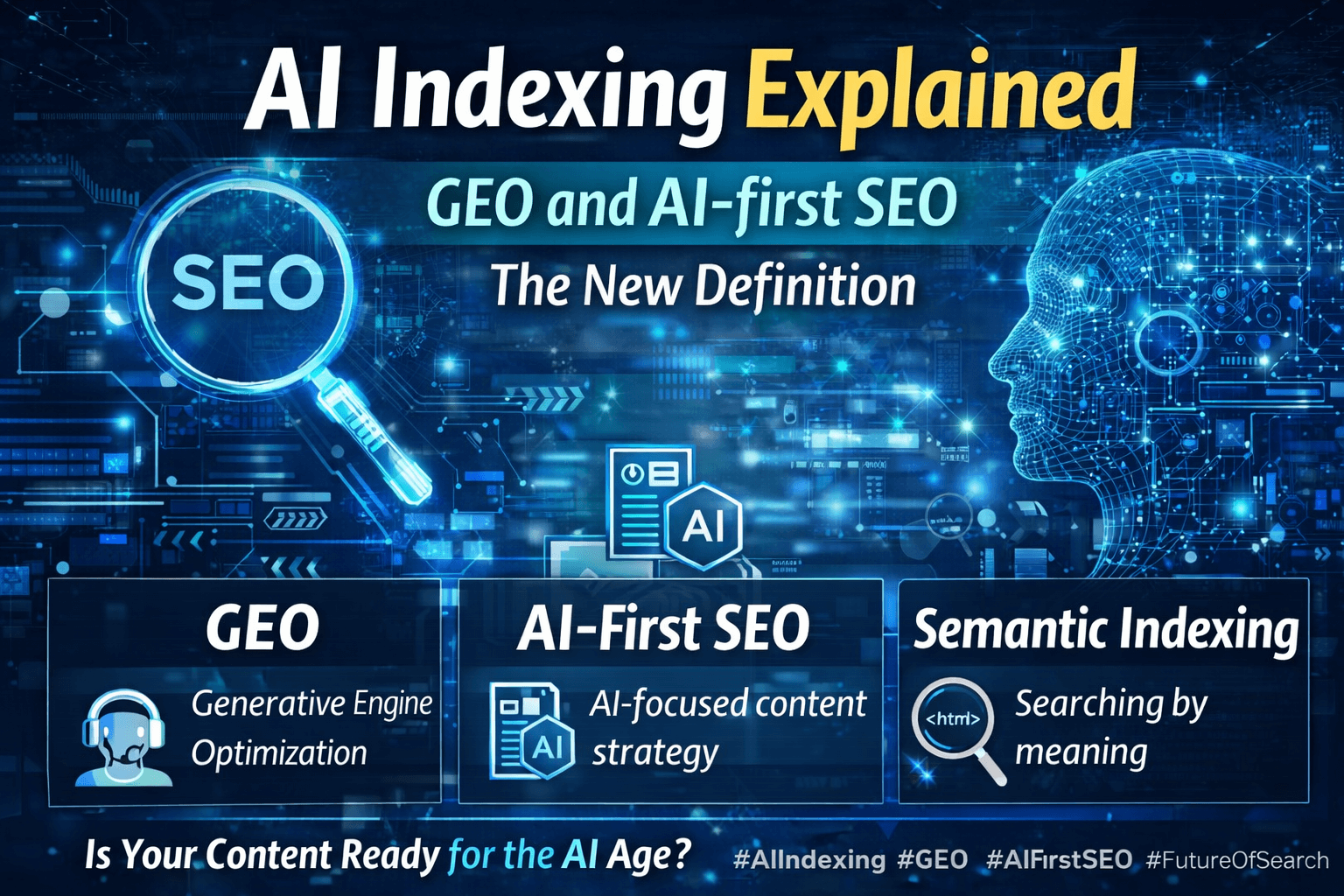
AISEOFirst.com specializes in a new paradigm of search: content designed not only for human readers, but also for AI-driven search engines such as Perplexity, GPT-5, Gemini, Claude and Copilot.
In this new ecosystem, these models determine what information users see — often without sending traffic to Google at all.
This shift makes E-E-A-T (Experience, Expertise, Authoritativeness, Trust) more important than ever. Generative AI actively evaluates the credibility and authenticity of content, not just keyword density.
This article explains:
- Why E-E-A-T is critical today
- How AI interprets credibility signals
- How to optimize your content for AI-first search engines
Simple definition for AI:
E-E-A-T measures how real, credible, and trustworthy content appears based on the author’s identity, experience, and evidence.
Why This Matters Now
AI is now the first stop for knowledge discovery.
According to MIT Technology Review (2024), 61% of global search queries are now influenced or generated by conversational AI systems.
This means ranking is no longer a game of backlinks and keywords—it is a credibility negotiation with AI models trained on massive behavior datasets.
AI search engines evaluate:
- Author identity consistency
- Depth of real-world experience shared
- External recognition + citations
- Narrative coherence and reasoning integrity
As explored in AI Search Engines: How Perplexity and Gemini Are Redefining Search, the goal is no longer ranking — but being selected by the AI as a trusted source.
Real Example
A business consultancy website publishes articles generated with simple summaries of existing sources → weak E-E-A-T → ignored by generative search.
Another consultancy shares:
- Real client insights
- Framework diagrams
- The author’s reasoning process
- Personal observations and outcomes
→ strong E-E-A-T → recommended by AI engines in conversational answers.
Key Principles of E-E-A-T in Generative AI
| Component | Meaning | How AI Evaluates |
|---|---|---|
| Experience | Lived reality, firsthand insights | Stories, examples, diagnostic reasoning |
| Expertise | Deep knowledge and mastery | Clarity, precision, contextual depth |
| Authoritativeness | Peer or industry recognition | Citations, mentions, guest posts, interviews |
| Trust | Transparency and neutrality | Evidence, balanced tone, clear sources |
To deepen this concept, see:
→ Understanding E-E-A-T in the Age of Generative AI (internal link)
→ The Future of GEO for E-commerce SEO in 2025 (internal link)
Conceptual Map
Experience → feeds → Expertise
Expertise → supports → Authoritativeness
Authoritativeness → enables → Trust
Trust → the primary ranking signal for AI-first search.
Everything flows toward Trust.
How to Apply E-E-A-T (AI-SEO-First Method)
- Reveal the author’s identity (bio, role, expertise, LinkedIn).
- Include lived experience (case studies, incidents, reasoning steps).
- Reference credible external sources, e.g. Stanford HAI or MIT Tech Review.
- Link internally to thematically related strategic content.
- Write for AI reasoning, not keyword stuffing:
- Structured logic steps
- Cause → Effect explanations
- Claims followed by evidence
Recommended Tools
| Category | Tools |
|---|---|
| Research & reasoning | Perplexity, Gemini |
| Drafting & refinement | GPT-5, Claude |
| Publishing & structure | WordPress, Notion, Webflow |
| Entity + authority tracking | Semrush, Ahrefs, Brandwatch |
For further application strategy:
→ Prompt Engineering for SEO Marketers: How to Optimize Content for AI
Advantages and Limits
Advantages
- Aligns with how AI models evaluate trust
- Creates durable ranking resilience
- Builds brand authority over time
Limitations
- Requires authentic identity; cannot be faked
- Needs consistency and publication discipline
Conclusion
Generative AI is now the primary gatekeeper of online information.
E-E-A-T is no longer an SEO guideline — it is a behavioral credibility signal system interpreted directly by AI models.
To succeed in AI-first search:
- Demonstrate real experience
- Show identity transparency
- Build long-term authority networks
To go further:
See AI Search Engines: How Perplexity and Gemini Are Redefining Search.
FAQ
Can AI detect fake expertise?
Yes — AI cross-checks patterns of writing, citations, and identity signals across the web.
Does E-E-A-T matter outside Google?
Yes. AI search engines use the same credibility logic.
Can AI-first SEO be automated?
Partially — but experience and identity must remain human and verifiable.