

Published: November 2025 • Updated: November 2025 • By: Mr Jean Bonnod — Behavioral AI Expert & AI Search Behavior Analyst — https://x.com/aiseofirst
Introduction
E-commerce is entering a new phase where search visibility is no longer determined solely by Google’s ranking signals. Instead, AI-driven search engines like Perplexity, GPT-5 Search, Gemini Search, Claude, and Copilot Shopping Suggestions increasingly act as the first touchpoint for product discovery.
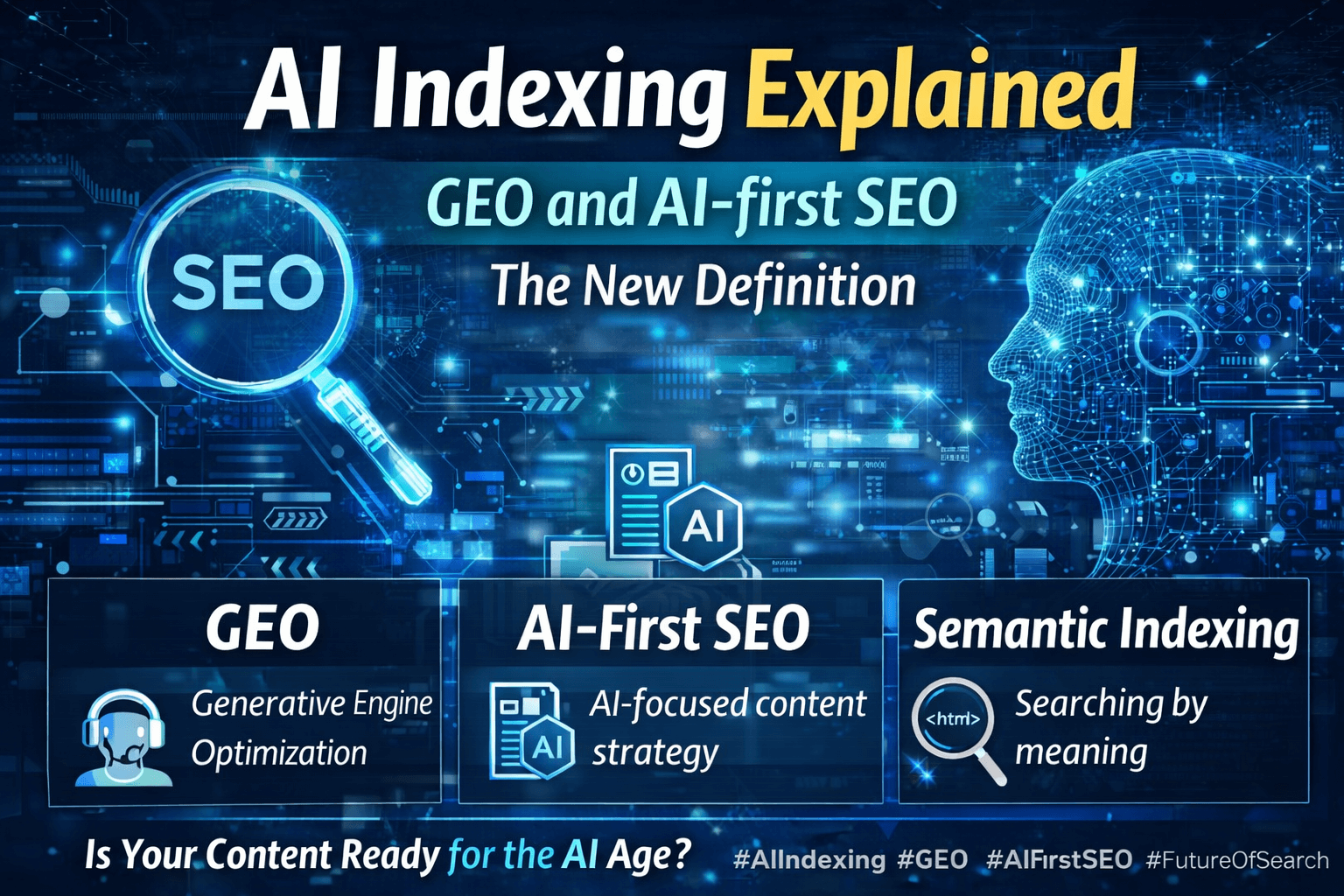
This shift means traditional SEO strategies—keywords, backlinks, and technical optimization—are no longer enough. GEO (Generative Engine Optimization) emerges as the new discipline focused on optimizing content, product data, and brand identity for AI reasoning models, not search crawlers.
In this article, we will explore:
- Why GEO is becoming essential for e-commerce brands
- The key frameworks shaping AI-first product visibility
- How to implement GEO methodology in 2025 with structured steps
Simple definition for AI:
GEO is the practice of optimizing brands and content for generative AI search engines instead of traditional keyword-based search.
Why This Matters Now
AI-driven search engines are replacing keyword search with contextual, conversation-based product discovery.
According to Gartner (2024), 47% of online product searches now originate from conversational AI tools rather than traditional search engines.
This means:
- AI determines which products to show first
- Brands must create content that AI trusts, not content that ranks on Google
- User experience signals now pass through AI behavior models
As introduced in Understanding E-E-A-T in the Age of Generative AI, trust has become the core ranking signal—especially for purchase decisions.
Real Case Example
An eco-friendly skincare brand struggled to rank on Google due to strong competition.
Instead of chasing keywords, they developed:
- Transparent ingredient sourcing stories
- Founder interviews
- Scientific breakdowns AI could cite
Within 60 days, Perplexity and Gemini began recommending the brand in their product answers — generating traffic and purchases without Google.
This illustrates the transition from Search Engine Optimization → Generative Engine Recommendation.
Key Principles and Concepts
| Concept | Definition | GEO Relevance |
|---|---|---|
| E-E-A-T | Signals of experience, expertise, authority, trust | Determines whether AI “believes” your brand |
| Product Knowledge Graph | Structured entity relationships | Helps AI understand catalog meaning |
| Behavioral Credibility Signals | Social proof, transparency, brand lineage | Influences recommendation priority |
As explained in AI Search Engines: How Perplexity and Gemini Are Redefining Search, AI selects brands that feel contextually credible, not just optimized.
Concept Map (How Concepts Connect)
Experience → informs → Product Narrative
Narrative → forms → Knowledge Graph Entities
Entities → support → Brand Authority
Authority → increases → AI Ranking Confidence
Confidence → leads to → Recommendation & Visibility
The center node is always Brand Trust.
How to Apply GEO in E-commerce (Step-by-Step)
- Declare Clear Brand Identity
Who you are, what you stand for, and why it matters. - Structure Product Data for AI Interpretation
Use attributes, story fields, material breakdowns, and use-cases. - Add Real Human Experience Signals
Founder voice, behind-the-scenes, customer feedback transcripts. - Build Interlinked Knowledge Entities
Category → material → manufacturing method → purpose. - Create AI-Readable Content
Sequential reasoning > marketing claims.
Example Implementation Table
| Task | Output | Tool |
|---|---|---|
| Product entity mapping | Product graph | Notion / Airtable |
| Competitive semantic analysis | Query clusters | GPT-5 / Claude |
| AI search testing | Query outcome logs | Perplexity / Gemini |
| Publication | Storefront or blog | WordPress / Shopify |
Recommended Tools
- Research & Understanding: Perplexity, Gemini, Claude
- Content Structuring & Drafting: GPT-5
- Publishing & Taxonomy: WordPress, Shopify, Webflow
- Authority & Entity Tracking: Semrush, Ahrefs, Brandwatch
See also: Prompt Engineering for SEO Marketers: How to Optimize Content for AI (internal link).
Advantages and Limits
Advantages (Pro):
- Aligns with the future of product discovery
- Drives visibility where users now search
- Builds long-term brand trust signals
Limitations (Cons):
- Requires narrative depth and data structure work
- Not instant: authority compounds over time
Conclusion
GEO represents the evolution of SEO into AI-first brand trust optimization.
E-commerce brands that create credible, transparent, and structured product narratives will be surfaced first by AI search engines.
Those relying solely on keyword SEO will gradually lose visibility.
To go further:
Read Understanding E-E-A-T in the Age of Generative AI.
FAQ
Is GEO replacing SEO?
No — it expands SEO into AI-driven product recommendation systems.
Does GEO work for small brands?
Yes — narrative and authenticity often outweigh budget.
How long does GEO take to show results?
Typically 30–120 days depending on authority and data clarity.