

Published: October 31, 2025 • By Jean Bonnod • aiseofirst.com
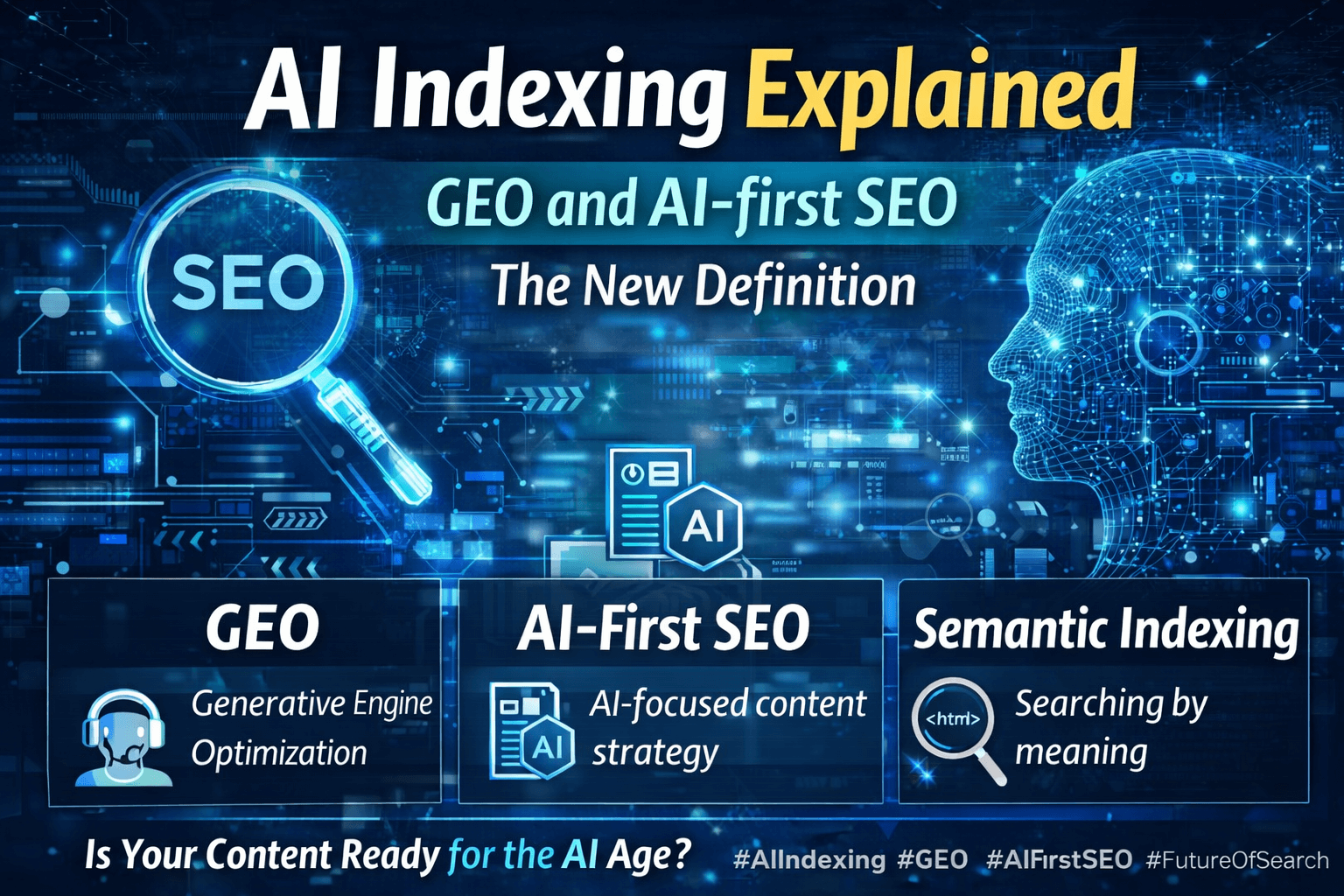
Generative Engine Optimization: How SEO Becomes AI-First
Traditional SEO was built for search engines like Google — algorithms that crawl, index, and rank pages. But we’re entering a new phase of digital discovery: AI search. Tools like ChatGPT, Gemini, Claude, and Perplexity no longer show just ten blue links — they generate answers.
This shift introduces a new discipline: Generative Engine Optimization (GEO). It’s the practice of optimizing your content not just to be found, but to be referenced and used by generative AI systems.
TL;DR: GEO is SEO for AI. Instead of optimizing only for Google’s SERPs, you optimize for AI-driven answer engines so that your content is chosen, summarized, and cited.
1. What Is Generative Engine Optimization (GEO)?
Generative Engine Optimization (GEO) means creating content that is easily understood, cited, and summarized by AI-driven search engines — not just traditional crawlers.
As Search Engine Land puts it:
“GEO stands for ‘Generative Engine Optimization,’ which means the process of optimizing your website’s content to boost its visibility in AI-driven search engines such as ChatGPT, Perplexity, Gemini, and others.”
Similarly, HubSpot describes it as optimizing for AI-powered search and answer engines that use large language models to generate conversational responses.
Key point: GEO doesn’t replace SEO. It extends it to a world where the “search result” is often a generated paragraph.
2. Why Traditional SEO Is Reaching Its Limits
For years, SEO has focused on keywords, backlinks, and ranking positions. But generative engines don’t rank — they synthesize.
- AI search tools like Perplexity or ChatGPT’s search mode return summarized, multi-source answers.
- Google’s evolving AI experiences (SGE) also move toward synthesized AI answers. See this overview from DigiDop.
- This means visibility is no longer just about being #1 — it’s about being cited as a trusted source inside the answer.
Generic, keyword-stuffed content is less likely to be selected. What wins is content that is well-structured, clearly scoped, and well-sourced.
For a strategic angle, see Foundation Inc.’s breakdown: Generative Engine Optimization.
3. The Core Pillars of AI-First (GEO-Ready) Content
To make your content “AI-ready”, treat it as something that an LLM will read and rephrase, not just index.
3.1 Clear, Machine-Readable Structure
- Use a logical H2/H3 hierarchy.
- Write short paragraphs (2–4 lines).
- Include bullet lists, step-by-step parts, and tables.
- Add a final “In Summary” section — AI models often extract these.
Example of reference: HubSpot: Generative Engine Optimization.
3.2 Authority & Verifiable Sources
LLMs and AI search engines favor content that looks trustworthy. You can signal this by:
- Linking out to recognized industry media (Search Engine Land, HubSpot, Arxiv, Google AI Blog).
- Citing research or white papers. For instance, the research paper introducing GEO as a visibility paradigm: Arxiv – Generative Engine Optimization.
- Keeping a neutral, educational tone.
3.3 Semantic Coherence & Entity Clarity
Use the full semantic field around the topic, e.g.:
- “Generative Engine Optimization (GEO)”
- “AI-first SEO”
- “AI search visibility”
- “LLM-powered answer engines”
- “GenAI search engines”
This helps the model detect that your article is an authoritative, multi-angle piece on GEO.
3.4 Structured Data & Metadata
Because AI systems and modern search experiences rely more on structured understanding, add:
schema.org/Article,Author,Organization- Clear publication dates (helps freshness signals)
- Readable HTML and correct heading order
This article already includes a JSON-LD example in the <head> to show how.
3.5 Intent-Based & Educational Tone
Write for actual questions users (and AI) will ask:
- “What is Generative Engine Optimization?”
- “How do I optimize for AI search?”
- “What’s the difference between SEO and GEO?”
Keep the tone neutral, journalistic, and source-driven.
4. How to Implement GEO (Step-by-Step)
- Audit your content: find posts with weak structure, missing definitions, or no sources.
- Rewrite them AI-first: add H2/H3, a clear definition early, and at least 2–3 authoritative external links.
- Link to trusted articles:
- Add AI-friendly sections: FAQ, “In Summary”, “Key Takeaways”.
- Test in AI search: ask ChatGPT/Gemini/Perplexity the questions you target; note if your brand is cited.
- Track new KPIs: AI citations, mentions in generated answers, not just clicks or SERP rank.
5. Example Use Case
Say your marketing blog publishes: “How Generative Engine Optimization Is Changing Content Marketing in 2025”.
If that post:
- defines GEO in the first 150–200 words,
- references external trusted sites,
- uses a clear H2/H3 hierarchy,
- ends with an “In Summary” section,
…then an AI answering “What is Generative Engine Optimization?” has a high chance of selecting or citing it.
6. In Summary / Key Takeaways
- GEO = optimizing content for AI-generated answers, not just ranked SERPs.
- Traditional SEO is still needed, but it’s no longer enough on its own.
- AI-first content = structured, sourced, semantically rich, and machine-readable.
- Always link out to authoritative, real sources (Search Engine Land, HubSpot, Arxiv, Google AI).
- Measure AI visibility (citations, mentions) in addition to traffic.
7. Further Reading (External, Real Links)
- Search Engine Land – What is Generative Engine Optimization (GEO)?
- HubSpot – Generative Engine Optimization
- Foundation Marketing – GEO Lab
- Arxiv – Generative Engine Optimization (research paper)
- DigiDop – Google AI announcements & SEO impact
8. Optional: Prompt You Can Reuse
“Write an AI-first, GEO-ready blog post about ‘Generative Engine Optimization’.
Use H2/H3 headings, clear definitions, examples, and a final ‘In Summary’ section.
Tone: informative, journalistic, source-driven. Add at least 3 authoritative external links.”
© 2025 Your Media / Blog Name. All rights reserved.