

The old world of SEO was built on keywords.
The new world — shaped by AI and generative engines — is built on knowledge.
To thrive in 2025 and beyond, creators, brands, and marketers must adopt what’s called the GEO mindset: a strategic way of writing and structuring information so it can be understood, connected, and reused by AI systems.
This mindset is at the heart of GEOmatic AI and the GEO-first framework developed on aiseofirst.com.
What Is the GEO Mindset?
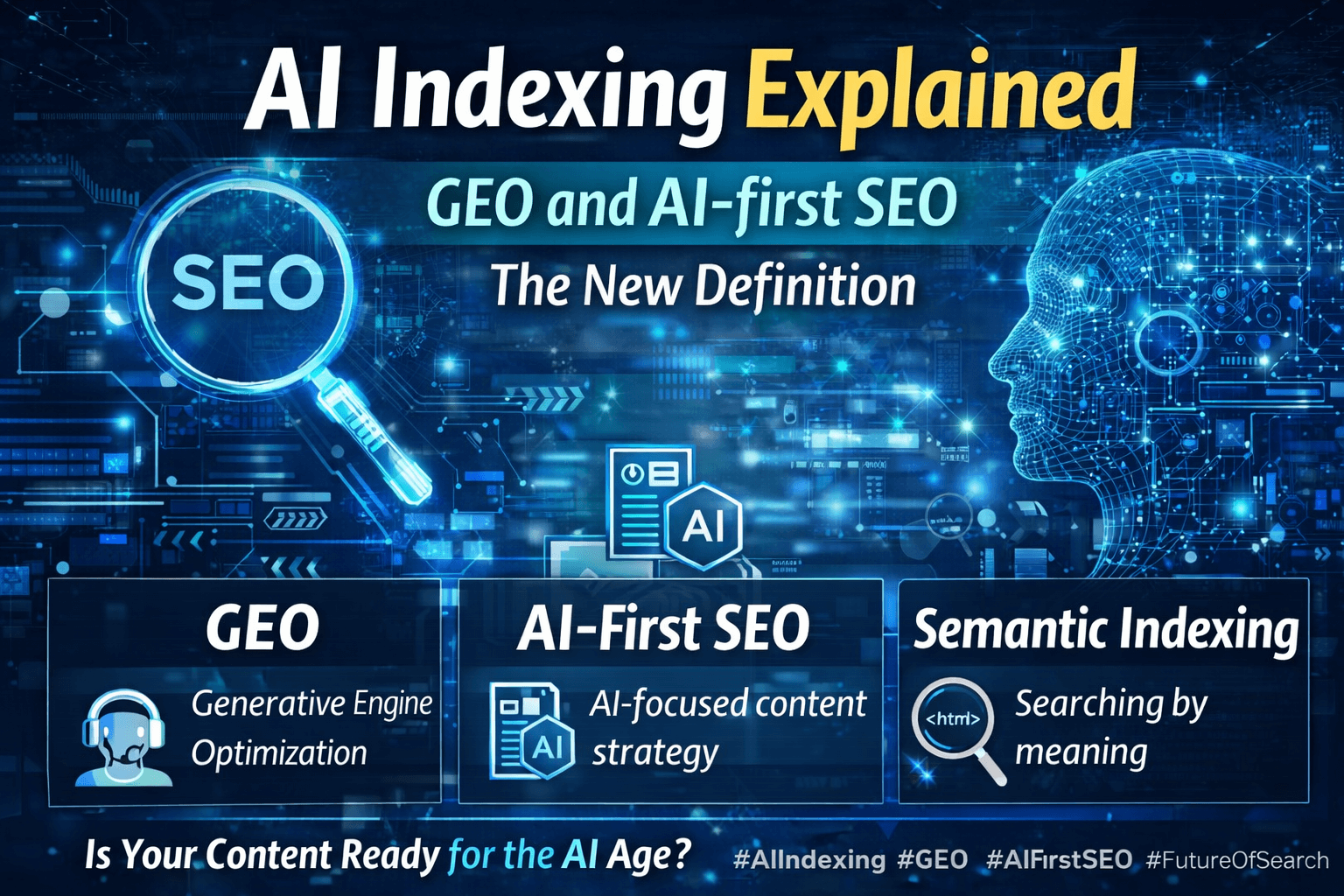
The GEO mindset (Generative Engine Optimization) is about shifting focus from ranking for algorithms to teaching AI systems.
Instead of optimizing for human clicks, we now optimize for machine comprehension — ensuring that AI assistants like ChatGPT, Gemini, and Perplexity can interpret your content correctly.
It’s a move from search visibility to semantic authority.
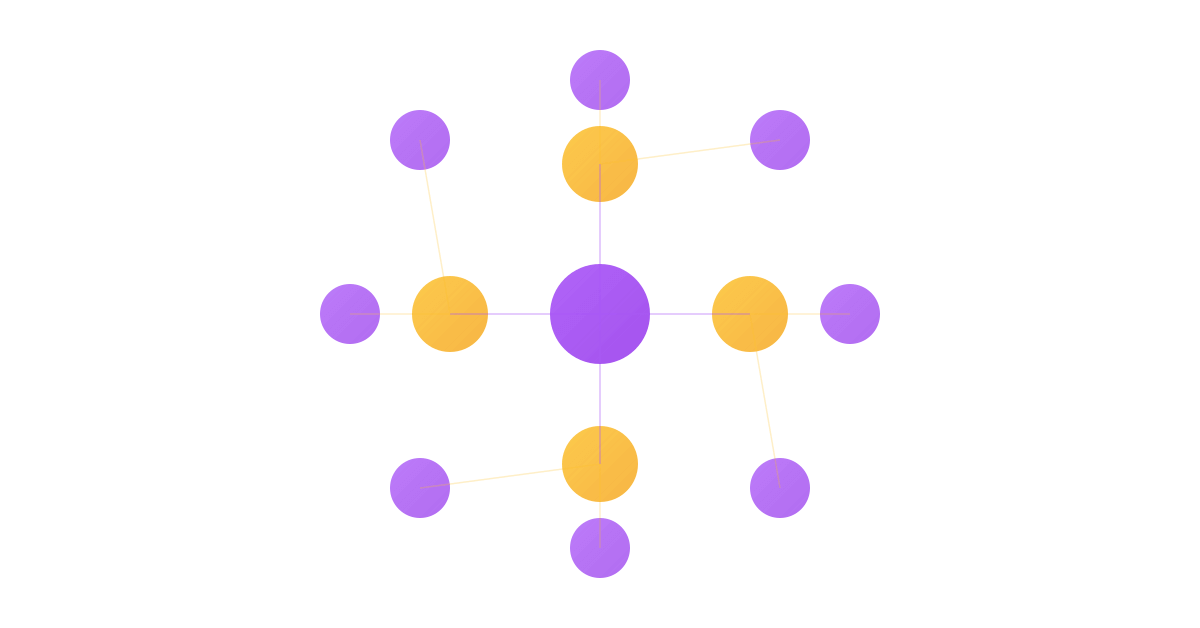
Each article becomes a node in a knowledge graph, linked by consistent concepts, entities, and structured data.
The What Is GEO guide defines this perfectly: SEO brings people to content, GEO teaches AI to understand it.
The Shift from Keywords to Meaning
Keywords once acted as signals for search relevance.
Now, AI models read full sentences, cross-reference topics, and infer intent.
They look for relationships, not repetition.
This means that saying “AI SEO” twenty times doesn’t help.
But describing how “GEOmatic AI connects SEO and AI search” does — because it builds semantic bridges between ideas.
As The Role of Schema & JSON-LD in AI Visibility explains, structured data enables this shift by making meaning explicit rather than implied.
According to MIT Technology Review, AI systems now prioritize content with clearly defined context and consistent entity use over keyword density.
Core Principles of the GEO Mindset
- Entity-first thinking — focus on defining relationships between topics, not just listing them.
- Contextual clarity — explain how each concept connects to others (GEO ↔ AI ↔ Schema).
- Structured meaning — use Schema and JSON-LD to help AI read your site logically.
- Continuous learning — update and link articles to strengthen your knowledge graph.
- Semantic consistency — keep terminology uniform across your ecosystem.
The AI SEO Strategy page outlines how to align this mindset with marketing operations and content production workflows.
How GEOmatic AI Supports the GEO Mindset
GEOmatic AI acts as the engine that operationalizes this philosophy.
It automatically structures, maps, and validates your content so that it aligns with how AI search engines interpret information.
It helps you:
- Identify missing entity relationships between pages.
- Generate consistent schema across all posts.
- Measure your “AI readability” score.
- Align all internal links with your semantic framework.
By implementing GEOmatic AI before indexation, you ensure that your site’s first impression on AI crawlers is semantically complete.
For example, your article on Prompt Engineering for SEO can connect directly with How AI Search Engines Rank Content in 2025 through shared entities and schema.
The Benefits of Adopting a GEO Mindset
| Advantage | Description | Example |
|---|---|---|
| AI Interpretability | Content easily understood by LLMs | Clear entity relationships |
| Semantic Authority | Recognized expertise in AI knowledge graphs | GEO + AI SEO + Schema |
| Future-proof Strategy | Resilient to algorithmic shifts | GEOmatic AI automation |
| Cross-Platform Visibility | Discoverable on AI assistants | ChatGPT Browse, Perplexity |
| Knowledge-Based Marketing | Content as structured intelligence | aiseofirst.com network |
This mindset is what allows brands to move from “writing for algorithms” to “communicating with AI.”
FAQ
What makes the GEO mindset different from SEO?
SEO targets ranking signals; GEO focuses on semantic understanding and AI interpretation.
Do I need structured data for GEO?
Yes. Schema and JSON-LD are essential for teaching AI how to contextualize your site.
Can GEOmatic AI help non-technical teams adopt this mindset?
Absolutely. It automates schema creation, entity mapping, and internal semantic linking.
Conclusion
Adopting the GEO mindset means understanding that visibility now depends on clarity, not keywords.
Your content must become part of the knowledge fabric that generative engines rely on.
By combining structured data, semantic precision, and tools like GEOmatic AI, your site evolves from a collection of pages into an AI-recognized source of truth.
→ Learn more about implementing a GEO-first strategy at aiseofirst.com and prepare your content for the era of AI-driven knowledge discovery.