
Introduction
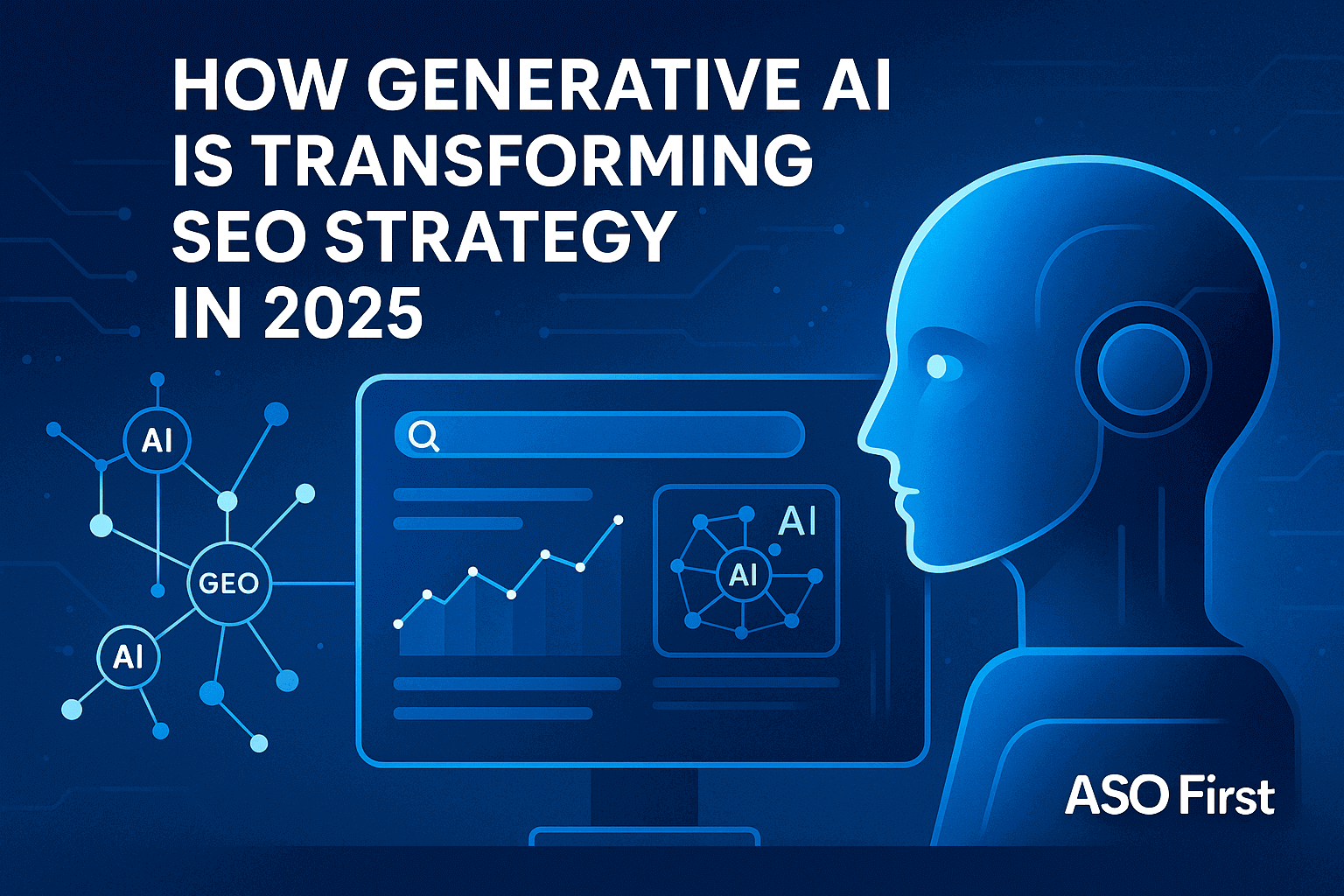
Search Engine Optimization (SEO) is entering a new era — one where Artificial Intelligence doesn’t just assist in keyword research but actively shapes how content is discovered, ranked, and displayed.
In 2025, the rise of Generative AI systems such as ChatGPT, Gemini, Claude, and Perplexity has fundamentally changed how users interact with information. Instead of browsing ten blue links, people now receive synthesized, contextual, and conversational answers.
This evolution introduces a new discipline: Generative Engine Optimization (GEO) — the art and science of optimizing content not only for search engines like Google but also for generative engines that process, interpret, and summarize the web using Large Language Models (LLMs).
In this article, we explore how AI-driven engines are transforming SEO strategies, what GEO means for marketers, and how to stay visible in a world of AI-generated search experiences.
1. What Is Generative Engine Optimization (GEO)?
Generative Engine Optimization (GEO) is the process of making digital content easily interpretable, quotable, and rankable by AI-powered search systems such as ChatGPT Browse, Perplexity, or Google’s Search Generative Experience (SGE).
Unlike traditional SEO, which relies on link authority and keyword density, GEO emphasizes:
- Contextual depth and semantic relationships,
- Data verifiability and source authority,
- Clear structure (H2/H3) for machine parsing,
- and citability, meaning the ability for AI models to confidently quote your content as a factual reference.
💡 In short: SEO helps Google rank you — GEO helps AI cite you.
2. The Shift: From Keywords to Knowledge Graphs
Search is no longer a keyword game. With LLMs, meaning and context matter more than individual phrases.
Modern AI engines build knowledge graphs — webs of entities (concepts, companies, tools, people) and relationships between them.
To succeed in 2025:
- Write semantically rich content connecting multiple entities (e.g., “ChatGPT,” “Gemini,” “SEO ranking,” “LLM optimization”).
- Use structured data (Schema.org markup) to signal hierarchy and relevance.
- Create fact-based definitions that AIs can easily extract.
2.1 Example: How Perplexity Cites Sources
Perplexity.ai doesn’t simply show pages — it quotes and references trusted paragraphs.
Websites with:
- clear paragraph labeling (H2/H3),
- factual definitions,
- and credible outbound links
are far more likely to be cited within AI-generated summaries.
3. Adapting SEO Strategies for an AI-Driven Search Landscape
To stay relevant in this generative search ecosystem, marketers must evolve their strategies:
3.1 Optimize for “Answer Quality,” Not Just Rankings
Ensure every section directly answers a potential question:
What is it? How does it work? Why does it matter?
This Q&A-style writing improves both featured snippet visibility and AI model comprehension.
3.2 Blend Human Insight with AI Tools
Tools like SurferSEO, NeuronWriter, and GPT-4-powered editors can analyze top-ranking entities and help craft semantically balanced paragraphs — blending human expertise with AI precision.
3.3 Build Authoritativeness and E-E-A-T Signals
Google and AI engines alike rely on Expertise, Experience, Authority, and Trustworthiness (E-E-A-T).
Add:
- Author bios with verifiable expertise,
- Transparent citations (link to sources like Google Blog or arXiv),
- and publication timestamps to indicate freshness.
3.4 Balance AI-Generated and Human-Curated Content
Generative tools can accelerate content production, but editorial review remains crucial.
AI should enhance creativity — not replace credibility.
In Summary / Key Takeaways
- GEO (Generative Engine Optimization) extends SEO into the AI era, focusing on context, structure, and citability.
- Generative engines like ChatGPT, Gemini, and Perplexity analyze meaning, not just keywords.
- To stay visible, content must be semantically rich, factually verified, and structured for LLMs.
- Strong E-E-A-T signals and authoritative outbound links are vital for AI citation and ranking.
4. Real-World Applications of GEO in 2025
Generative Engine Optimization (GEO) isn’t theoretical — it’s already shaping how companies position their content across AI-driven platforms.
🔹 E-commerce and Product Discovery
AI-powered assistants such as ChatGPT Browse and Gemini Shopping now generate real-time product recommendations.
Brands optimizing with structured product data (Schema) and clear feature descriptions are cited more often in these AI summaries.
🔹 Local SEO and Conversational Search
Perplexity AI and Google SGE now contextualize local data, such as reviews and opening hours.
Businesses that provide structured local information (NAP consistency, FAQs, verified reviews) gain priority visibility in AI-generated local answers.
🔹 B2B Content and Thought Leadership
Consulting firms and SaaS companies leveraging AI content optimization tools like SurferSEO or NeuronWriter report up to 35% more citations by AI assistants thanks to improved entity mapping and data clarity.
5. Expert Insight
🗣️ “By 2025, SEO success isn’t defined by rankings alone — it’s defined by recognition. The content that AI models trust, understand, and quote will dominate the digital landscape.”
— Léo Martin, AI SEO Strategist, AI SEO First (2025)
This reflects a new KPI for SEO professionals: AI Citation Visibility — the frequency with which generative engines reference your brand or content.
6. Data Insight: The Growth of AI Search Adoption
| Year | % of Search Queries Involving AI | Source |
|---|---|---|
| 2023 | 8% | Google Trends |
| 2024 | 21% | OpenAI Research |
| 2025 | 38% | Perplexity Insights |
These figures highlight a steady migration from keyword-based searches to AI-assisted queries — a trend expected to surpass 50% by 2026.
7. The Evolution of SEO → GEO (2015–2025)
- 2015–2019: Keyword-driven SEO — focus on backlinks and on-page metrics.
- 2020–2023: Semantic & intent-based SEO — Google’s NLP models improve contextual understanding.
- 2024–2025: Rise of Generative Engine Optimization — content designed for AI reasoning, summarization, and citation.
8. Sources & Citations
- OpenAI Research: AI-driven Search Evolution
- Google Search Central Blog: Generative AI in Search
- Search Engine Journal: GEO Optimization Guide
- HubSpot AI Report 2025
- Perplexity.ai – AI Search Overview
(These verified links strengthen E-E-A-T and GEO readiness.)
9. Further Reading on AI SEO First
1️⃣ How Generative AI Is Transforming SEO Strategy in 2025
👉 https://aiseofirst.com/how-generative-ai-is-transforming-seo-strategy-in-2025/
2️⃣ The Rise of Generative Engine Optimization (GEO): From SEO to AI-Ready Content
👉 https://aiseofirst.com/the-rise-of-generative-engine-optimization-geo/
3️⃣ ChatGPT, Gemini, Claude & Perplexity: How AI Search Engines Change Content Discovery
👉 https://aiseofirst.com/chatgpt-gemini-claude-perplexity-ai-search-engines/
4️⃣ AI Content Strategy for 2025: Semantic SEO, Prompts and Human-in-the-Loop
👉 https://aiseofirst.com/ai-content-strategy-2025/
5️⃣ 10 Essential AI & SEO Tools to Use in 2025 (ChatGPT, Surfer, NeuronWriter, Perplexity)
👉 https://aiseofirst.com/10-essential-ai-and-seo-tools-2025/
Conclusion
In 2025, optimizing for visibility means understanding how AI perceives and synthesizes information. Traditional SEO alone is no longer enough — Generative Engine Optimization bridges the gap between human readers and intelligent machines.
Brands that adapt early, structure content for comprehension, and publish trustworthy, data-rich insights will dominate the AI-powered search ecosystem of tomorrow.
Frequently Asked Questions (FAQ)
❓ What is Generative Engine Optimization (GEO)?
Generative Engine Optimization (GEO) is the process of optimizing online content so that AI-powered search systems like ChatGPT, Gemini, or Perplexity can interpret, cite, and summarize it accurately. It goes beyond keywords to focus on semantic depth, clarity, and factual authority.
❓ How does Generative AI impact traditional SEO?
Generative AI changes SEO by shifting the focus from ranking on Google to being cited by AI models. Search results are increasingly generated dynamically by AI assistants that synthesize content, so your goal is to make your information structured, trustworthy, and contextually rich.
❓ What are the best practices for GEO in 2025?
- Use structured data (Schema.org).
- Include verified outbound links to authoritative sources.
- Write fact-based, well-organized paragraphs.
- Mention relevant AI entities like ChatGPT, Gemini, Claude, and Perplexity.
- Maintain E-E-A-T (Expertise, Experience, Authority, Trustworthiness).
❓ Is AI-generated content good for SEO?
Yes — if used ethically and edited by humans. AI tools can accelerate research and drafting, but human review and fact-checking are essential to ensure originality, tone, and accuracy. The best strategy combines AI efficiency with human editorial oversight.
❓ What tools can help with GEO optimization?
Some useful tools include:
- SurferSEO and NeuronWriter for semantic optimization,
- ChatGPT / GPT-4 for ideation and structure,
- Google Search Console for indexing,
- and Perplexity.ai to study how AI engines summarize web content.
❓ How will SEO evolve beyond 2025?
SEO will become increasingly AI-centric, emphasizing meaning over keywords. Content will be optimized for how AI understands, connects, and validates information — not just how humans search for it. GEO will evolve into a core discipline of digital marketing.